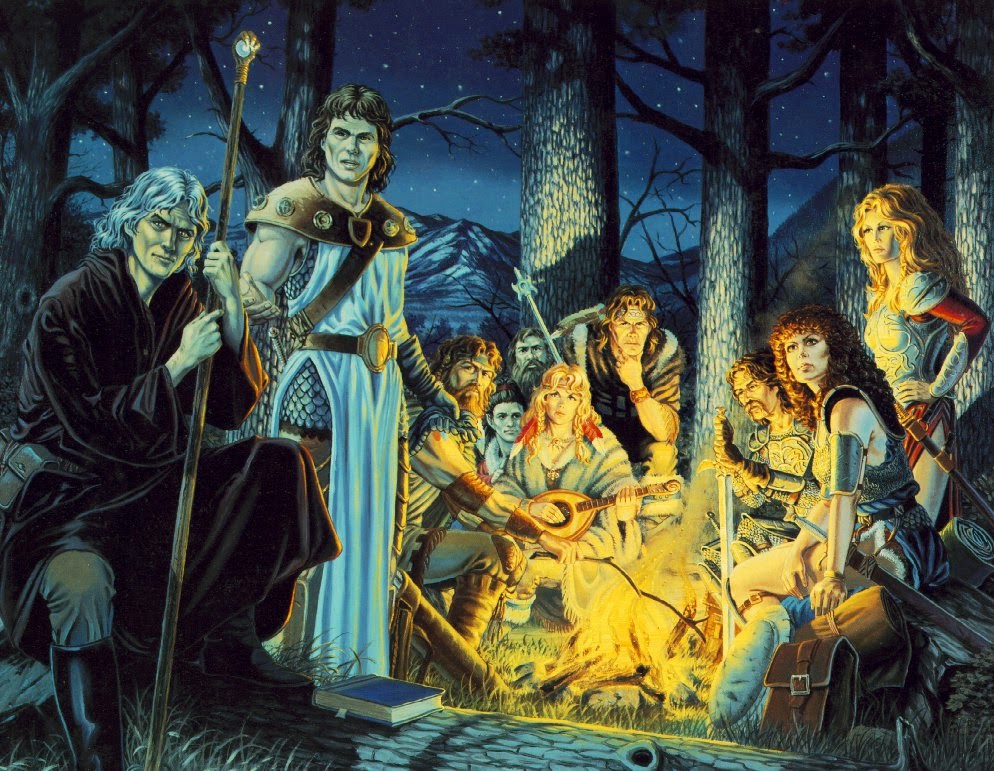
Dragonlance Races: A Complete Guide to Krynn's Peoples
Meet the races of Dragonlance: kender, elves, dwarves, minotaurs and more. Discover what makes each people of Krynn unique and unforgettable.
Dragonlance Races: A Complete Guide to Krynn's Peoples
You've just arrived in Krynn. You're excited, your pack full of carefully chosen equipment, ready for the great adventure.
Then a small bright-eyed being appears from nowhere, greets you with an enormous grin — and three turns later you realize your coin purse has vanished. He's across the square, admiring the contents with genuine curiosity and a completely innocent expression.
Welcome to the world of Dragonlance races. And this is only the beginning.
What makes Dragonlance races different from any other RPG?
In Forgotten Realms or most fantasy worlds, races exist as mechanical options with attribute bonuses. In Krynn, races exist as consequences of cosmic events.
All beings of Krynn descend from five origins: dragons, ogres, animals, humans and elves. But it was a single magical event — the passage of the Graygem of Gargath — that created the extraordinary diversity we find today.
The story goes like this: Reorx, the Forging God, created the Graygem at the request of Chislev, who had been convinced by Hiddukel, the god of trickery. The gem was supposed to anchor neutrality in the world. Instead, it created magical chaos wherever it passed, reshaping creatures and generating new races out of nothing.
Two armies of gnomes went after the gem. When they finally reached it — after three siege attempts with their contraptions, each more disastrous than the last — the gem exploded in blinding light. When vision returned, the gnomes driven by greed had become dwarves. Those driven by curiosity had become kender.
All of Krynn's diversity was born from a cosmic-scale blunder. It's impossible not to love this setting.
(See our introductory post on the Dragonlance setting to understand the complete cosmology of Krynn.)
The races of Krynn: who they are and why they're unforgettable
Kender — the race that will drive your Game Master mad (and you'll love it)
The kender is Dragonlance's most original creation. Imagine a classic halfling, remove all shyness, add irresistible curiosity, zero fear of absolutely anything, and a completely honest relationship with the concept of private property — where "honest" means "nonexistent."
Kender don't steal. They borrow. Temporarily. Without asking. Sometimes they forget to give things back. But it's not theft — and they are perfectly sincere about that.
What makes the kender work as a character is that this irresistible curiosity is the driving force of any adventure. While the paladin calculates the risks, the kender has already entered the dungeon. While the mage studies the monster, the kender has already tried to befriend it.
Kender also have two unique abilities that make them memorable at the table: Taunt, capable of making any intelligent creature angry enough to attack irrationally — and Fearlessness, which makes them immune to dragons, demons, and anything that causes supernatural terror.
Tasslehoff Burrfoot, the most famous kender in the Chronicles, is living proof that this race can be both the problem and the solution to any situation. Often at the same time.
Tinker Gnomes — engineering on the edge of sanity
Krynn's gnomes are engineers by divine curse. Reorx created them when he grew angry with overly proud humans — and transformed them into a race obsessed with inventing things that almost never work as they should.
Their city, Mount Nevermind — an extinct volcano inhabited by roughly 59,000 gnomes — is one of the most chaotic places in fantasy. Catapults for internal transportation. Steam rails that sometimes reach the right destination. Devices with 300 parts where three would suffice.
The golden rule of gnomes: the larger the device, the less complex — and the fewer chances of exploding. The smaller, the more complex — and the more guaranteed the catastrophe. They know this. They keep doing it anyway.
Playing a tinker gnome is choosing creative chaos as a lifestyle — and it's one of the most entertaining RPG experiences there is.
Elves — three nations, three personalities, one arrogance in common
Krynn has several types of elves, and each is distinct enough to be almost a separate race. What unites them all is a certain conviction of superiority — in varying degrees.
The Silvanesti are the high elves of the setting: beautiful, refined, and deeply convinced they are superior to all other living beings. Their society is rigid with hereditary castes. During the War of the Lance, they enslaved their own Kagonesti cousins. They are fascinating precisely because they are difficult to like.
The Qualinesti are the more tolerant version of the Silvanesti — which isn't saying much, but it's something. Founded by Kith-Kanan after a painful civil war, they build alliances with other races and have in Tanis Half-Elven one of their greatest heroes — and their greatest symbol of contradiction.
The Kagonesti are the wild elves: no permanent cities, no castes, living in harmony with nature. They are fierce warriors and guardians of the land. And they were enslaved by their own Silvanesti cousins during the war. That history is not forgotten by either side.
There are also sea elves — Dimernesti and Dargonesti — capable of transforming into otters and dolphins respectively, who fought epic battles against the forces of the Queen of Darkness beneath the waters of Ansalon.
Practical tip: The Kagonesti are one of the best choices for anyone who wants to play a character with legitimate grievance and a history of oppression. All the tension with the Silvanesti is already baked into the lore — the Game Master barely needs to do any work.
Dwarves — the Great Betrayal that splits a race in two
The story of Krynn's dwarves is a story of pride, isolation and consequences that never fade.
Mountain dwarves live in Thorbardin, the greatest underground kingdom of Ansalon. When the Cataclysm came, King Duncan made an impossible decision: he closed the mountain gates, leaving outside the dwarves who lived on the surface. They were his own kinsmen.
Those exiles became the hill dwarves — rough, independent, and with a hatred cultivated for generations against their mountain cousins. They call the event the Great Betrayal. When the War of the Lance begins, that wound is still open and bleeding.
And then there are the gully dwarves — called Aghar by other dwarves. Descended from crosses between gnomes and dwarves, they are considered stupid by every other race. And they are, in fact, incapable of counting beyond two: any larger number is simply called "two," meaning "more than one." Even so, they are extraordinary survivors — and Krynn treats them with a comedic affection that is genuinely warm.
(See our post on the Knights of Solamnia to understand how dwarves and humans shared — and disputed — the world of Ansalon.)
Irda — the ogres who chose Good
This is the most unlikely race in all of Dragonlance: enlightened ogres.
At the beginning of the world, ogres were the most beautiful race of all — but their hearts were cold and turned toward Evil. A group led by Igrane received from humans the gift of free will. Looking toward their race's future, they saw only destruction and degradation.
They separated. They went to a distant island. And they became the Irda: tall, blue- or green-skinned, graceful, peaceful, with extraordinary magical abilities and the rare capacity to change their own form at will.
They are, essentially, what ogres could have been if they had made different choices. This is Dragonlance at its best: an entire race as a moral metaphor about free will.
Minotaurs — honor, strength and bovine manifest destiny
Krynn's minotaurs are not dungeon monsters. They are a civilization with history, a code of honor, and a clear sense of mission: one day, they will rule the world.
Enslaved for centuries — primarily by the Empire of Istar — they saw the Cataclysm as divine intervention in their favor. They used the chaos to found their island kingdoms of Mithas and Kothas, separated from the continent by the Blood Sea.
Their philosophy is straightforward: the strong rule, the weak serve, and everything is decided in the Circus. Every position of power is won in combat. Even the emperor can be challenged and overthrown by any minotaur willing to fight for it — and capable of winning.
They are brutal, but consistent. And no race in Krynn navigates the seas with greater skill.
Where to dive deeper into the world of Dragonlance races
If you're fascinated by these peoples and want to see them in action, the best source remains the Chronicles trilogy. Kender, dwarves, elves and minotaurs come to life in a way no sourcebook can replicate.
For those who want to play today using D&D 5e mechanics, the campaign book brings updated rules for Krynn's races — covering races, classes and the context of the War of the Lance with everything your group needs to get started.
Practical tip: A table with mixed races — a kender, a hill dwarf and a Silvanesti elf — practically writes its own conflicts. The interpersonal tension is already baked into the lore. Just let the characters exist and the story happens.
How to choose your race in Dragonlance: quick guide by playstyle
Want exploration, chaos and the unexpected? Kender or tinker gnome. No other choice guarantees that every session will be different from the last.
Want dramatic weight and historical conflict? Hill dwarf carrying resentment from the Great Betrayal, or half-elf with no real sense of belonging in either parent culture.
Want magical power combined with cultural depth? Silvanesti elf or Irda — races with rich lore and unique abilities that justify every roleplay session.
Want straightforward combat with its own philosophy and dramatic tension? Minotaur. Without a doubt.
The beauty of Dragonlance races is that every one of them carries its history on its back. You don't just choose a character sheet with attribute bonuses — you choose an entire perspective on the world of Krynn. A viewpoint shaped by centuries of events that you'll feel in every interaction with the other characters.
That's what sets Dragonlance apart from any other fantasy setting.
(See our post on the Robed Mages and discover how Krynn's magic interacts with the setting's different races.)
Which of these races sparked your curiosity the most? Tell us in the comments — and if you've played Dragonlance before, which was the most memorable race you played? Share it with your table group. The next campaign might start with that conversation.
Recommendations
Related books & products
D&D: Dragonlance — Shadow of the Dragon Queen
Aventura oficial da Wizards of the Coast ambientada em Krynn.
Dragonlance: Crônicas Vol. 1 — Dragões do Crepúsculo do Outono
O início da saga épica de Krynn por Weis & Hickman.
Conjunto 7 Dados RPG — Preto com Dourado Perolado
Os dados mais vendidos no Brasil, perfeitos para qualquer mesa.
As an Amazon Associate, I earn a small commission from qualifying purchases — at no extra cost to you.
Posts relacionados
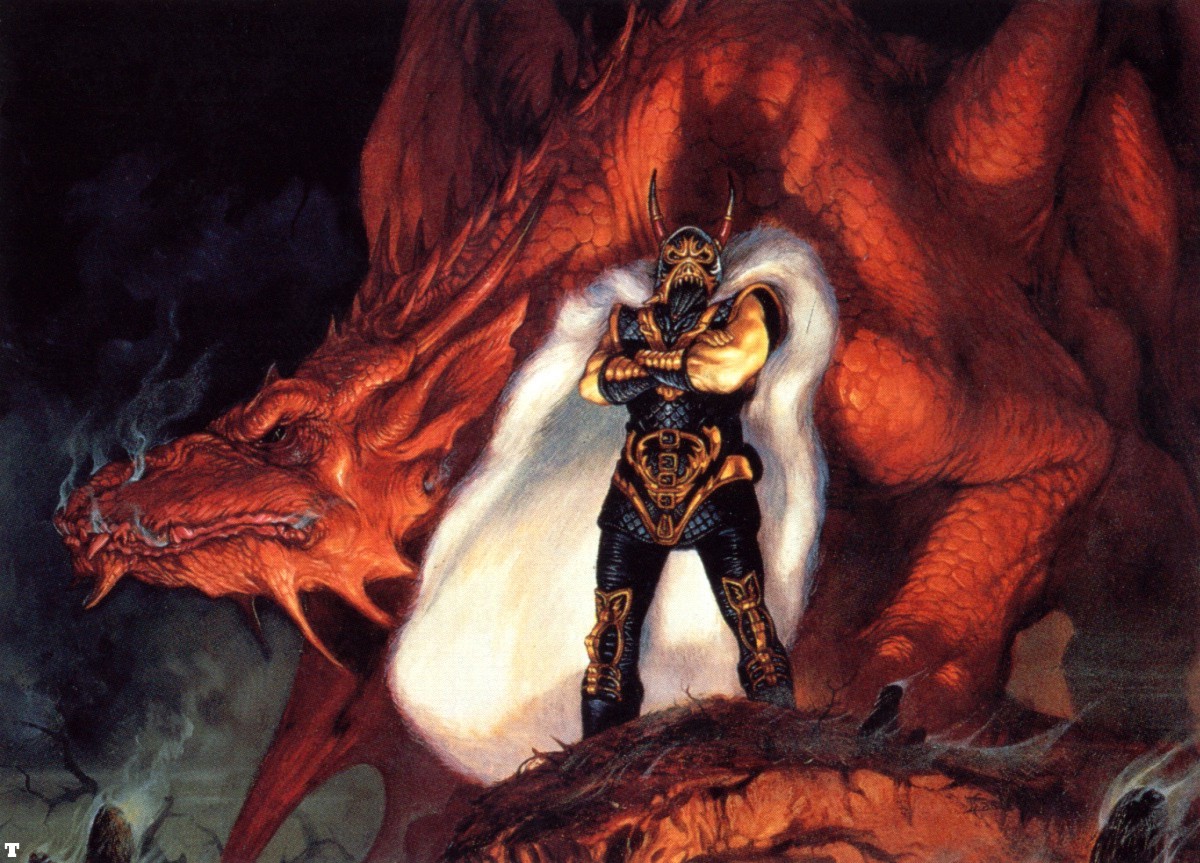
Dragonlance Gods: Complete Guide to Krynn's Pantheon
Meet the gods of Dragonlance: Paladine, Takhisis, Mishakal and all 21 gods of Krynn. The pantheon that shaped the entire history of the setting.
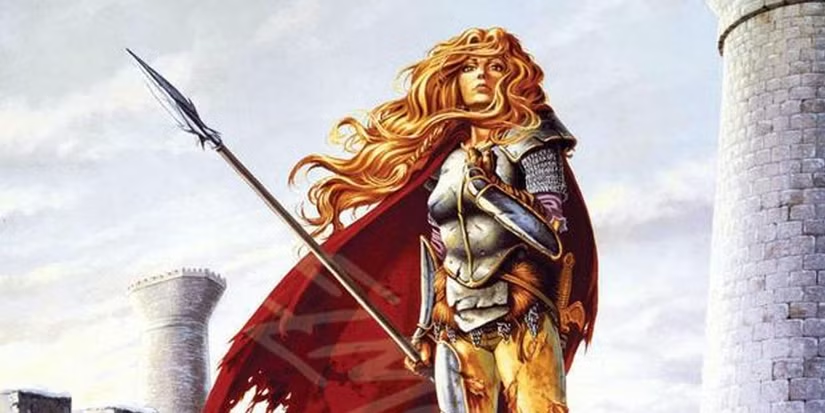
Dragonlance Magic Items: Complete Guide to Krynn's Artifacts
Discover Dragonlance's magic items: Dragonlances, the Staff of Magius, Dragon Orbs and more. The artifacts that defined Krynn.
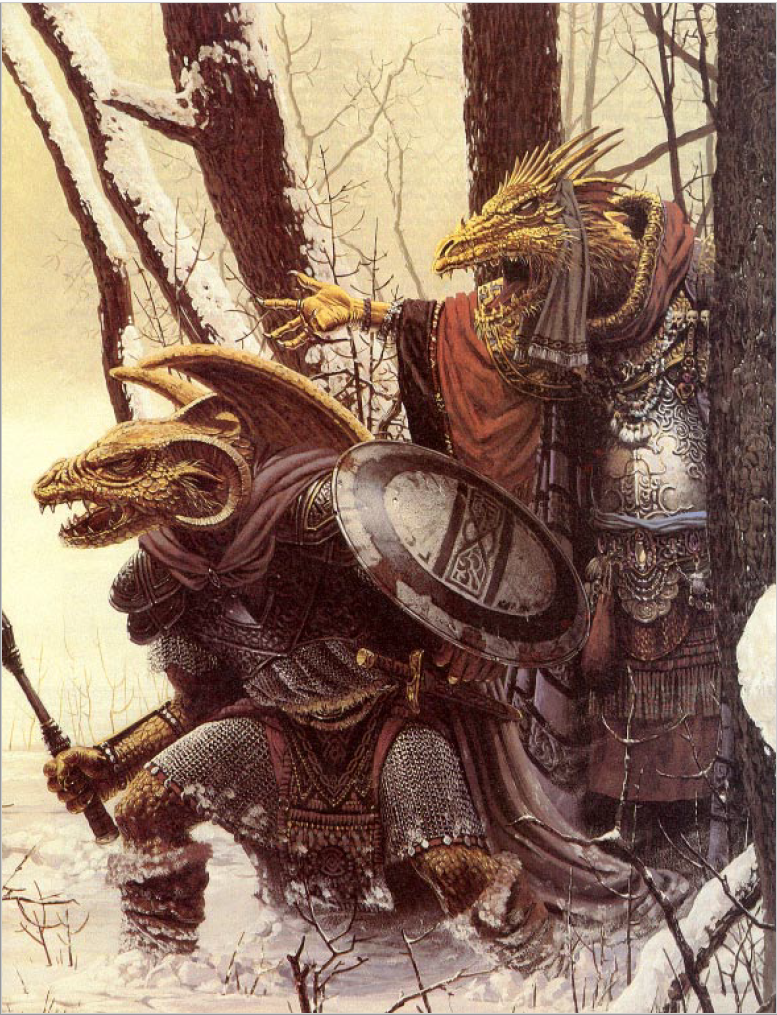
Dragonlance Creatures: Draconians and the Dragons of Krynn
Meet the Draconians and dragons of Krynn: the unique creatures of Dragonlance that made the setting unforgettable for fantasy RPG.
Comments
Loading comments…
Log in to leave a comment: