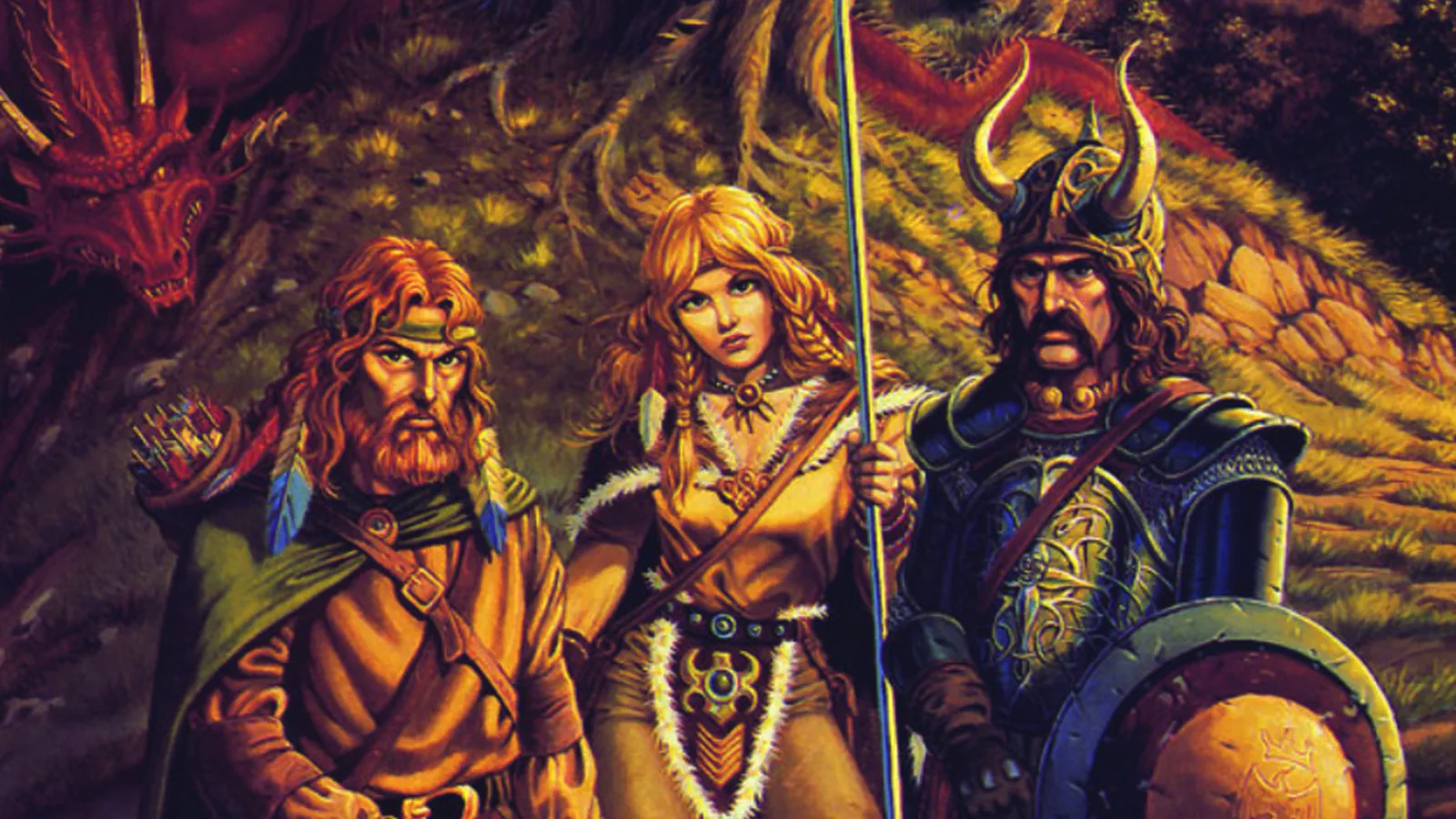
Dragonlance Characters: The Icons of Krynn
Meet the characters of Dragonlance: Raistlin, Tanis, Kitiara, Lord Soth and more. The icons who made Krynn unforgettable.
Dragonlance Characters: The Icons Who Made Krynn Unforgettable
He enters the room in silence. Lungs that barely function. Skin golden as metal. Hourglass eyes that see everything — everything — in a state of constant decay.
Raistlin Majere hasn't said a word yet. And he's already the most fascinating character in the setting.
Dragonlance's characters are the reason this saga has survived decades after its release. They are not perfect heroes. They are not one-dimensional villains. They are people — with real contradictions, histories of genuine pain, and choices that come at a steep cost.
(See our post on Dragonlance's history to understand the events that shaped each of these characters.)
Why Dragonlance characters are different from any other RPG
Most fantasy worlds have NPCs. Dragonlance has people.
The difference is subtle but brutal: an NPC exists to deliver information, sell items, or die dramatically. A person exists independently of the hero party — has their own motivations, acts according to their principles even when it's inconvenient, and sometimes makes choices the party would never approve of.
Raistlin doesn't save the world because he's the hero. He saves the world — in the one instance where this happens — for reasons that have everything to do with himself and almost nothing to do with altruism.
Tanis doesn't lead because he's the strongest. He leads because no one else can make decisions when everything is falling apart.
Kitiara is on the wrong side of the war and you'll spend a good part of the Chronicles rooting for her anyway.
That's what makes Dragonlance unique. And it's why these characters are still discussed, analyzed and loved decades later.
Raistlin Majere — the most complex mage in fantasy
Say the name Raistlin Majere to any Dragonlance veteran and watch the reaction. It isn't simple admiration. It's something more complicated — a mixture of fascination, pity and discomfort.
Raistlin is a genius. He is cruel. He is capable of devastating tenderness toward the twin brother he endlessly manipulates. And he is, technically, the man who nearly destroyed the universe because he wanted to become a god.
His origin is marked by the Test of High Sorcery — the trial that every mage in Krynn must pass or die attempting. Raistlin survived. The price: ruined lungs that make him bleed when he strains his voice, golden skin like polished metal, and hourglass eyes that see everything in constant decay. Every person he looks at, he sees aging and dying. Every flower, he sees rotting.
He passed in Red Robes. He ended in Black Robes. And when he decided to challenge Takhisis herself for dominion over the universe, the Conclave of Mages was paralyzed — not because they thought he was wrong, but because they weren't sure they could stop him.
What makes Raistlin work as a character isn't the power. It's the duality. He hates weakness because he knows it from the inside — he was always the smaller, weaker twin, protected by his strong brother. He despises compassion because he knows it's a vulnerability. And yet, beneath all of that, there is real love for Caramon — so entangled in resentment and jealousy that even Raistlin can't separate one from the other.
His arc in the Legends is Dragonlance's most important question: when you've achieved absolutely everything you desired, what remains?
Raistlin's answer is devastating.
Practical tip: If you're going to run Raistlin as an NPC, remember: he never does anything without a reason. Every bit of help he offers the party has a cost or a hidden purpose. But that purpose is never simply malice — it's always, at bottom, about Raistlin trying to prove something to himself.
Tanis Half-Elven and Kitiara — the hero who didn't want to be and the villain you'll love
Tanis Half-Elven is the smartest choice Weis and Hickman made in creating the Chronicles: the protagonist of an epic war between Good and Evil is a man who can't decide which side he's on.
Being half-elven in Krynn means belonging to neither world. The elves see him as impure. The humans see him as strange. And Tanis has internalized that rejection in a way that makes him simultaneously the most insecure character and the group's most effective leader — because he never assumes he knows the right answer, which forces him to listen to everyone before deciding.
And then there's Kitiara.
Kitiara Uth Matar is the half-sister of Raistlin and Caramon — and Highlord of the Blue Dragon, one of the most feared commanders of the Dragonarmies. She is Tanis's deepest love. She knows it. And she uses it as a weapon whenever she needs to.
What makes Kitiara extraordinary as a character is that she isn't cruel out of evil nature. She's a survivor who learned early that the world rewards strength and punishes feeling. She chose Takhisis's side not out of fanatical belief, but because she calculated it would be the winning side — and because the Queen of Darkness offered real power to those who proved their worth.
Kitiara is ambitious, charismatic, brutally honest, and completely loyal on her own terms. When the war ends the wrong way for her, she doesn't ask for mercy. She draws up a new plan.
The tension between Tanis and Kitiara taints the entire narrative of the Chronicles and Legends — because you know he still loves her, she knows she can still use him, and both know that love could never end well.
Lord Soth and Fizban — the fallen knight and the god in disguise
Dragonlance has a gift for creating characters who carry historical weight in every scene. Lord Soth and Fizban are the two extremes of that spectrum.
Lord Soth — the most deserved damnation in all of fantasy
Lord Soth was a Knight of the Rose — the highest degree of honor in all of Solamnia. He could have saved the world from the Cataclysm. He received the warning. He set out to complete his mission.
On the way, elven clerics intercepted him. They knew his sins: a secret marriage, a concealed murder, an illegitimate heir. They offered silence in exchange for his return. Soth turned back. The Cataclysm came.
His elven wife and child died in the flames before the throne. The image of their bodies was permanently seared into the stone — no rug covered it, no brush removed it.
The gods did not grant him death. They gave him something worse: an eternity of absolute awareness of what he had done and what he had failed to do. Lord Soth is now a Death Knight — armor blackened as if he had been through fire, two orange flame-eyes where a face should be, a voice that seems to come from beneath the earth.
He is technically chaotic evil. But there is a dark dignity to him — he fights honorably, acknowledges bravery in his enemies, and carries his burden with the rigidity of someone who accepts punishment because he knows he deserved it. His obsession with Kitiara in the Legends is the final proof that even in eternal damnation, Soth searches for something that resembles purpose.
Fizban the Fabulous — the most unlikely god in all of fantasy
At the other extreme: a scrawny old man with a lopsided pointed hat, rat-colored robes, and a memory that clearly doesn't work properly. He forgets spells. He arrives at the wrong time. He worsens situations that were already bad with good intentions.
Fizban the Fabulous is Paladine — the father of Good, the most powerful of Krynn's gods — traveling the world disguised as a bumbling mage.
And it works perfectly, because Paladine understands something other Dragonlance gods don't: direct intervention solves today's problem and steals tomorrow's lesson. So he shows up. He suggests. He complicates. And he lets mortals discover their own answers.
The moment you realize Fizban is Paladine retroactively changes every scene he appeared in — and it's one of the best-constructed reveals in fantasy literature.
The supporting cast that stole the scenes
Dragonlance has a full cast of secondary characters who would be protagonists in any other setting.
Tasslehoff Burrfoot is the kender who proves that courage isn't the absence of fear — it's the absence of self-preservation instinct. Tas loses two of the best friends he ever had during the war. It's probably the only event that makes him wonder, for a few minutes, whether adventures are worth it. Then he moves on, because he's a kender and the world still has so many unexplored places.
Caramon Majere starts as the strong brother who protects the weak one. He finishes the Legends as the only character who went through the setting's most demanding development arc: accepting that his brother is genuinely evil, that he cannot change this, and that he needs to learn to have self-worth beyond being Raistlin's protection. The journey goes through alcoholism, time travel and a confrontation in the Abyss.
Dalamar the Dark is proof that context matters as much as choice. Exiled from Silvanesti for studying Black Robe magic — forbidden to elves — he became Raistlin's apprentice on behalf of the Conclave, with the secret mission of spying on him. He genuinely admires the master. And yet he knows, with all his wisdom, that Raistlin cannot be left unsupervised.
Crysania of Tarinius is the cleric of Paladine who makes the same mistake as the Kingpriest of Istar on a smaller scale: she is good, devout, and so convinced of her mission that she confuses ambition with calling. Her journey is about learning that compassion and humility are not weaknesses — they are the foundations of any real faith.
Tika Waylan Majere could have been a decorative character — the barmaid who fell for the hero. Instead, she is one of the most emotionally intelligent characters in the setting: she loves Caramon enough to throw him out of the house when she realizes that staying would be letting him die slowly.
Takhisis — the villain who never gives up
No discussion of Dragonlance's characters is complete without the main antagonist.
Takhisis, the Queen of Darkness, can appear as the most beautiful temptress any man has ever seen, as a warrior in black armor with eyes of fire, or as a five-headed chromatic dragon. In any form, everyone in her presence — including those of good alignment — feels her power and experiences something resembling awe.
She isn't a villain out of caprice. She genuinely believes that total dominion over Krynn is not just desirable but right — it is, in her view, simply the natural state of things. She initiated the three Dragon Wars. She orchestrated the Cataclysm through the Kingpriest's arrogance. She prepared the War of the Lance for decades with meticulous patience.
And when she was defeated at Neraka, she immediately began drawing up the next plan.
Takhisis works as an antagonist because she has reasons, not just power. And because the setting takes her seriously enough to show that defeating her doesn't solve the problem — she returns. She always returns.
How to find these characters
The best way to meet these characters is through the primary sources. The second volume of the Chronicles is where Lord Soth appears in all his dark glory, where Kitiara shows her true nature, and where the war reaches its darkest point before the turning.
For the story of Raistlin and Caramon in the post-war period, the Legends trilogy takes these characters to the limit — with time travel, the Cataclysm seen from within, and the final revelation about what Raistlin is willing to sacrifice.
And for those who want to use these characters as NPCs in a D&D 5e campaign, the War of the Lance sourcebook brings playable versions of the context with guidance for running the setting's greatest names.
Practical tip: The secret to running these NPCs is simple — never treat them as guaranteed allies. Raistlin helps when it suits Raistlin. Fizban shows up at the wrong time. Kitiara keeps promises to the letter, but interprets every word in the way that benefits her most. They have lives of their own. Let them live.
What unites all these characters
Raistlin, Tanis, Kitiara, Soth, Fizban, Tasslehoff, Caramon, Dalamar, Crysania, Takhisis.
What they have in common — beyond inhabiting the same world — is that they all carry the weight of choices that cost something real. None of them got where they are for free. None of them could have gotten there any other way.
Dragonlance understands that memorable characters are not born of impressive powers or noble lineages. They are born of human contradictions placed under extreme pressure.
And that is why you will remember them long after you close the book.
(See our post on Dragonlance's factions to understand how each of these characters fits into the orders and organizations that shape the world of Krynn.)
Which of these characters made the deepest impression on you — in reading, in RPG, or simply for what they represent? Raistlin still divides opinions after decades. Lord Soth still chills the blood. Tasslehoff still brings a smile. Tell us in the comments who stayed with you — and share it with someone who needs to discover these characters today.
Recommendations
Related books & products
Dragonlance: Crônicas Vol. 1 — Dragões do Crepúsculo do Outono
O início da saga épica de Krynn por Weis & Hickman.
Dragonlance: Crônicas Vol. 2 — Dragões da Noite do Inverno
A guerra continua em Krynn neste segundo volume.
Dragonlance: Crônicas Vol. 3 — Dragões do Alvorecer da Primavera
O desfecho da trilogia das Crônicas de Dragonlance.
As an Amazon Associate, I earn a small commission from qualifying purchases — at no extra cost to you.
Posts relacionados
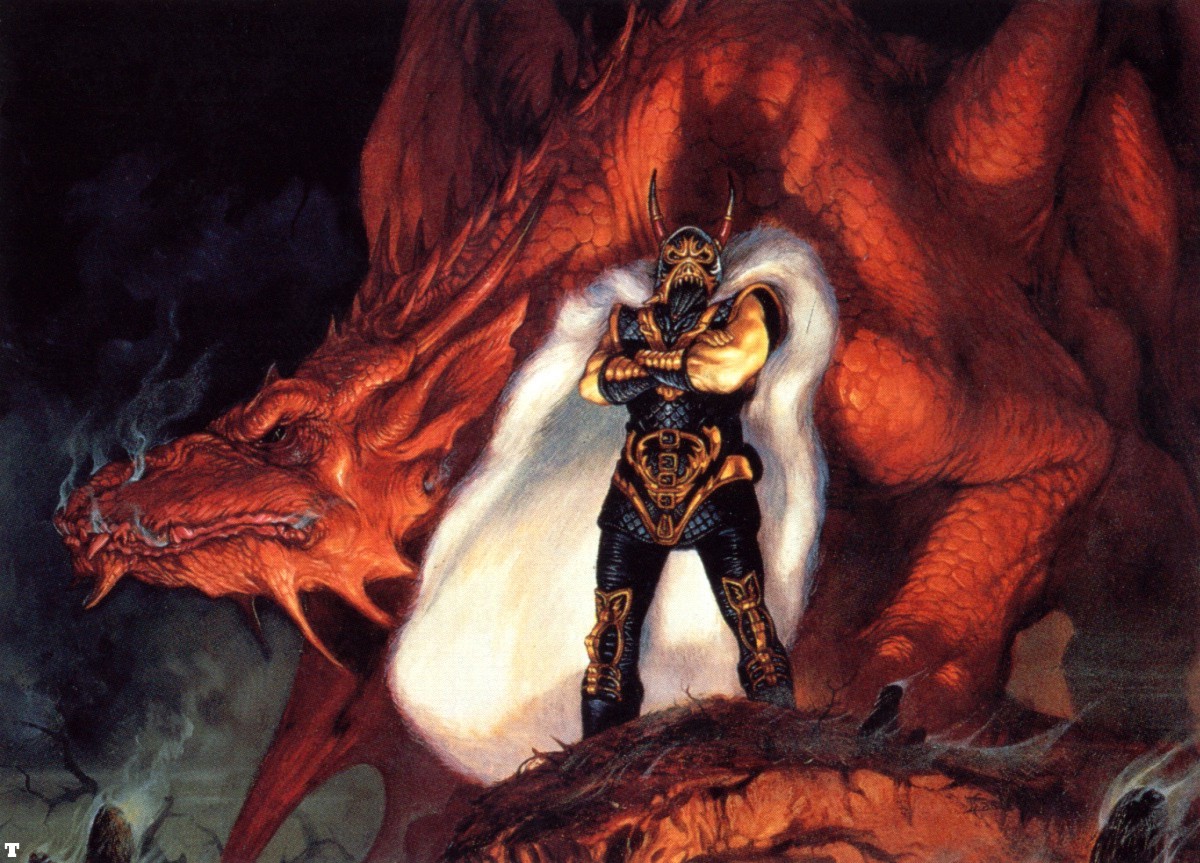
Dragonlance Gods: Complete Guide to Krynn's Pantheon
Meet the gods of Dragonlance: Paladine, Takhisis, Mishakal and all 21 gods of Krynn. The pantheon that shaped the entire history of the setting.
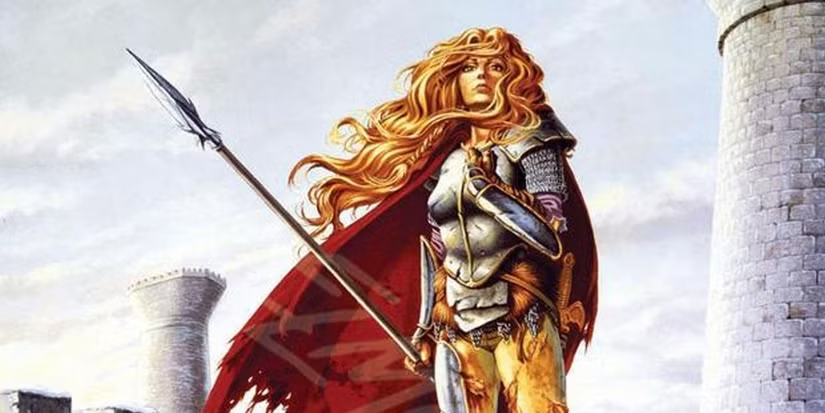
Dragonlance Magic Items: Complete Guide to Krynn's Artifacts
Discover Dragonlance's magic items: Dragonlances, the Staff of Magius, Dragon Orbs and more. The artifacts that defined Krynn.
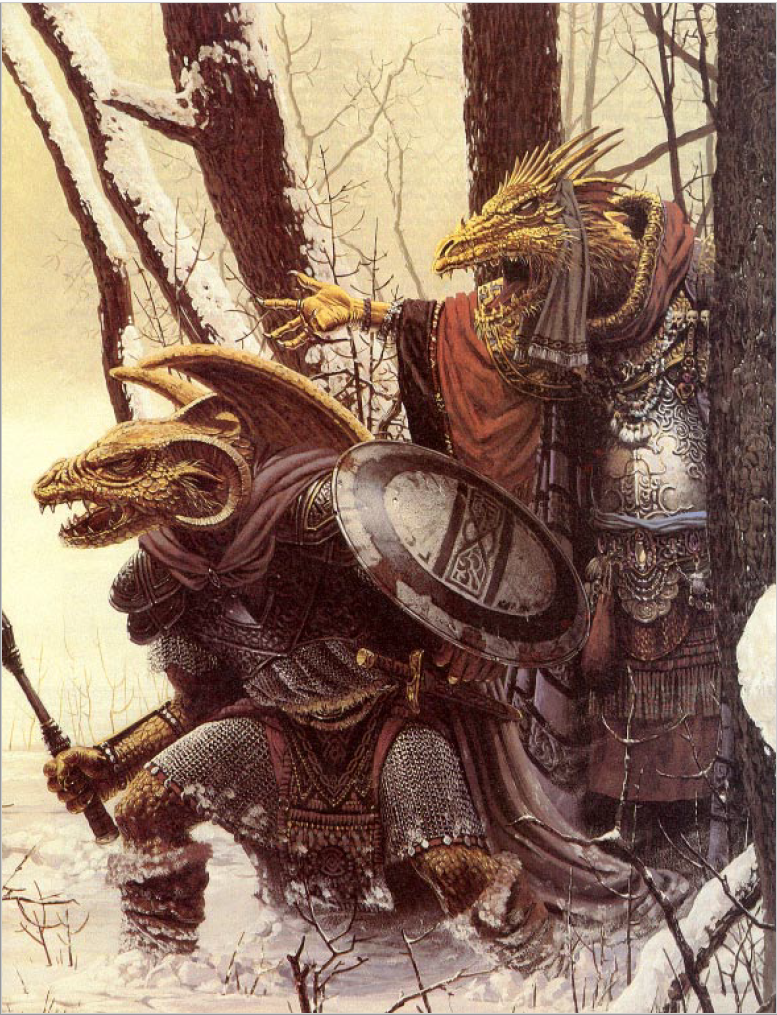
Dragonlance Creatures: Draconians and the Dragons of Krynn
Meet the Draconians and dragons of Krynn: the unique creatures of Dragonlance that made the setting unforgettable for fantasy RPG.
Comments
Loading comments…
Log in to leave a comment: